ServicesUSDA Loans
USDA Loans in Sunset Valley
For buyers purchasing in a USDA-eligible area with family income under the program limit, this home loan can cover the full price with nothing down. We confirm the address and the income test early, and the same loan officer guides your file all the way to closing.
How USDA financing works and who it suits
USDA guaranteed loans are made by private lenders like us, with the U.S. Department of Agriculture standing behind part of each one. The term runs 30 years and the rate stays fixed the whole way. The program was created to help moderate-income buyers purchase in areas the USDA classifies as rural or suburban, and because of that guarantee, a borrower who qualifies can finance the full purchase price without a down payment.
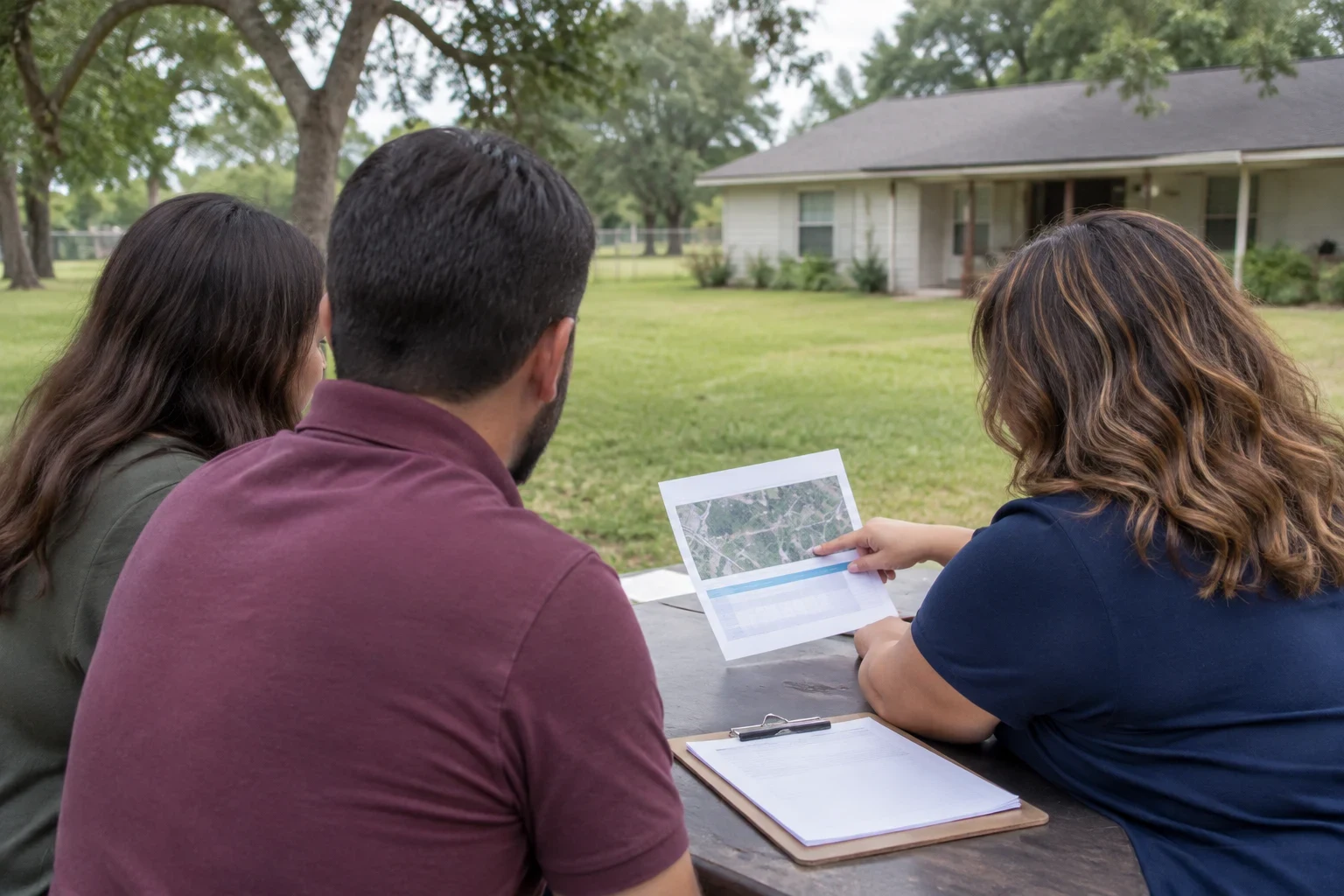
Two checks come first on every USDA file. The property has to fall inside the USDA eligibility map, and the combined income of every adult who will live there has to sit below the limit for that county and family size. Across greater Austin, many addresses close to the city land outside the map, while some farther out still qualify. We look up each address on your list, so you never write an offer on a property the program will not finance.
If the address or the income test rules USDA out, you hear that plainly from us, along with what does work, which is often an FHA loan or a conventional loan with a small down payment. The loan officer who ran your first check is the same person who walks you through those options.
What we handle on a USDA loan
Checking each address
Any property you are seriously considering, we run against the USDA map. The boundaries get updated now and then, so we confirm it once more before you go under contract.
Working out the income test
The USDA looks at earnings from every adult who will be living there, whether or not they sign the loan. We go through that calculation with you and apply the deductions the program allows, including those for dependents and child care.
Pre-qualification, then pre-approval
It begins with a phone conversation about your situation. Once your documents are in, we issue a full pre-approval that gives sellers a reason to take your offer seriously.
Appraisal and property condition
Besides value, the USDA appraiser checks that the property is livable and structurally sound. We flag common sticking points early, such as a worn-out roof or stairs without handrails, so you can address them with the seller.
Lender and USDA approval
We underwrite the file first, and then the USDA reviews it on its own. We assemble it carefully so that second look goes through without avoidable follow-up requests.
A single contact to closing
The loan officer you speak with on day one coordinates the appraiser, the title company and your agent, and remains the one person you call with questions.
Signs a USDA loan may be the right call
The down payment is what holds you back
A monthly payment fits your budget, yet saving a large lump sum would push your purchase years out. On an eligible property, USDA takes that requirement away.
Your search reaches past the city core
Buyers looking toward the outer edges of the metro sometimes find their addresses fall inside the eligibility map. A quick check is worth it before setting the program aside.
Your earnings are steady and moderate
The program is designed for buyers under the area income limit. Below that line, a USDA loan can carry a lower monthly cost than a comparable FHA loan.
You will live in the property yourself
USDA financing covers a primary residence only. For a rental or a second property, we can talk through hard money loans or conventional financing instead.
How a USDA loan moves from first call to closing
- 1
An opening conversation
By phone, we go over your income, who will be living with you, your credit and where you are shopping. By the end you will know whether USDA is a realistic fit and about how much you may qualify for.
- 2
Paperwork and pre-approval
You provide recent pay stubs, two years of tax returns, bank statements and ID. We go through each document with care and then issue a pre-approval letter for your agent.
- 3
Contract, appraisal and our approval
After the seller accepts, we reconfirm the address on the map, order the USDA appraisal and complete underwriting in our office.
- 4
USDA sign-off and closing
Next the file goes to the USDA for its approval. Once it comes back, we set the closing date and review the final numbers with you before anything is signed.
Where the money goes on a USDA loan
No down payment does not mean no costs. The USDA collects a guarantee fee at closing, which most borrowers roll into the loan balance, and a smaller yearly fee that is divided into the monthly payment. The factors below set your rate and your closing figures, and we give you each one in writing before you commit.
- Your credit profile
- A strong credit history usually earns a better rate and an easier run through automated approval. A thin or uneven history can still qualify, though the file may be underwritten by hand.
- The two USDA fees
- These are set by the USDA, not by us. Rolling the upfront fee into the loan leaves more cash in your account at closing, in exchange for a slightly higher balance.
- Third-party closing charges
- Every USDA closing includes title work, the appraisal, prepaid interest and initial escrow deposits. The seller may agree to pay part of these, and if the appraisal comes in above the price, some can be financed.
- Property taxes and insurance
- Both are collected with your monthly payment through escrow. They vary by county and by property, and they often change the payment more than the rate does.
USDA loan questions we hear often
Something not covered here? (512) 746-0139
Is a USDA loan only for farms or acreage?
No. It finances ordinary single-family properties that the borrower will live in. Rural describes where the address sits on the USDA map, not how the land is used.
How can I tell whether an address qualifies?
Give us the address and we check it against the USDA eligibility map, then check it again before closing. The answer is address-specific, so two listings only minutes apart can come back differently.
Who counts toward the income limit?
The USDA adds up income from every adult living at the property, including anyone who will not sign the loan. Allowed deductions for dependents and qualifying child care can lower the total that is measured against the limit.
Is there a USDA refinance option?
Yes, but only for borrowers whose current mortgage is already a USDA loan; the program offers streamlined refinances for them. If your loan is FHA, VA or conventional, we would look at a conventional refinance or a HELOC with you.
Why does a USDA closing take longer?
After we approve the file, the USDA does its own review, which adds time compared with a conventional loan. We build that into your contract dates from the start and keep you and your agent posted at each stage.
Find out if USDA works for you
Tell us where you are looking and who will live with you. We will check eligibility, talk through your numbers and stay your contact through closing.